How to Repair Pool Plaster Cracks: The Complete Guide
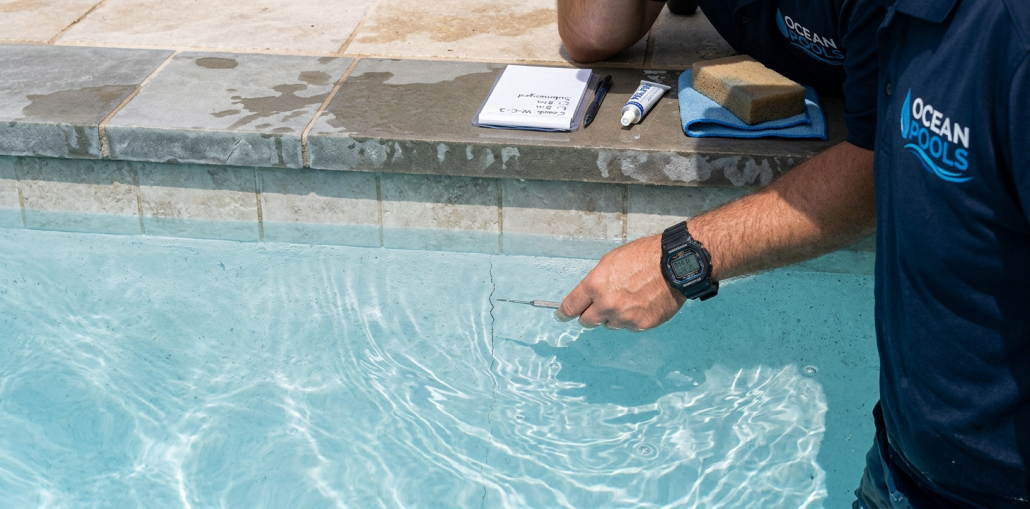
Pool plaster cracks can start small, but they rarely stay that way. If you’ve ever looked into a pool and noticed a thin line spreading across the surface, you already know the sinking feeling that comes with it. The good news is that many cracks can be repaired successfully when you understand what caused them, how serious they are, and which products are designed for the job.
If you’re dealing with pool plaster cracks, the first step is not guessing. It’s figuring out whether you’re looking at a cosmetic hairline crack, a structural issue, or a problem tied to movement, water chemistry, or aging materials. That distinction matters because the wrong repair can fail fast, waste time, and cost more in the long run.
What Causes Pool Plaster Cracks?
Pool plaster cracks usually form because the surface has been stressed beyond what it can handle. That stress can come from ground movement, settling, improper application, shrinking during cure, poor bonding, or long-term exposure to harsh water chemistry.
Common causes include
- Normal aging and wear
- Soil movement or settling under the shell
- Rapid drying during installation
- Improper mix ratios or application errors
- Unbalanced water chemistry over time
- Seasonal expansion and contraction
Not every crack means the entire pool needs resurfacing. Some are isolated and repairable, while others point to deeper movement. If the crack is active, widening, or paired with hollow sounds, you may need a more comprehensive evaluation.
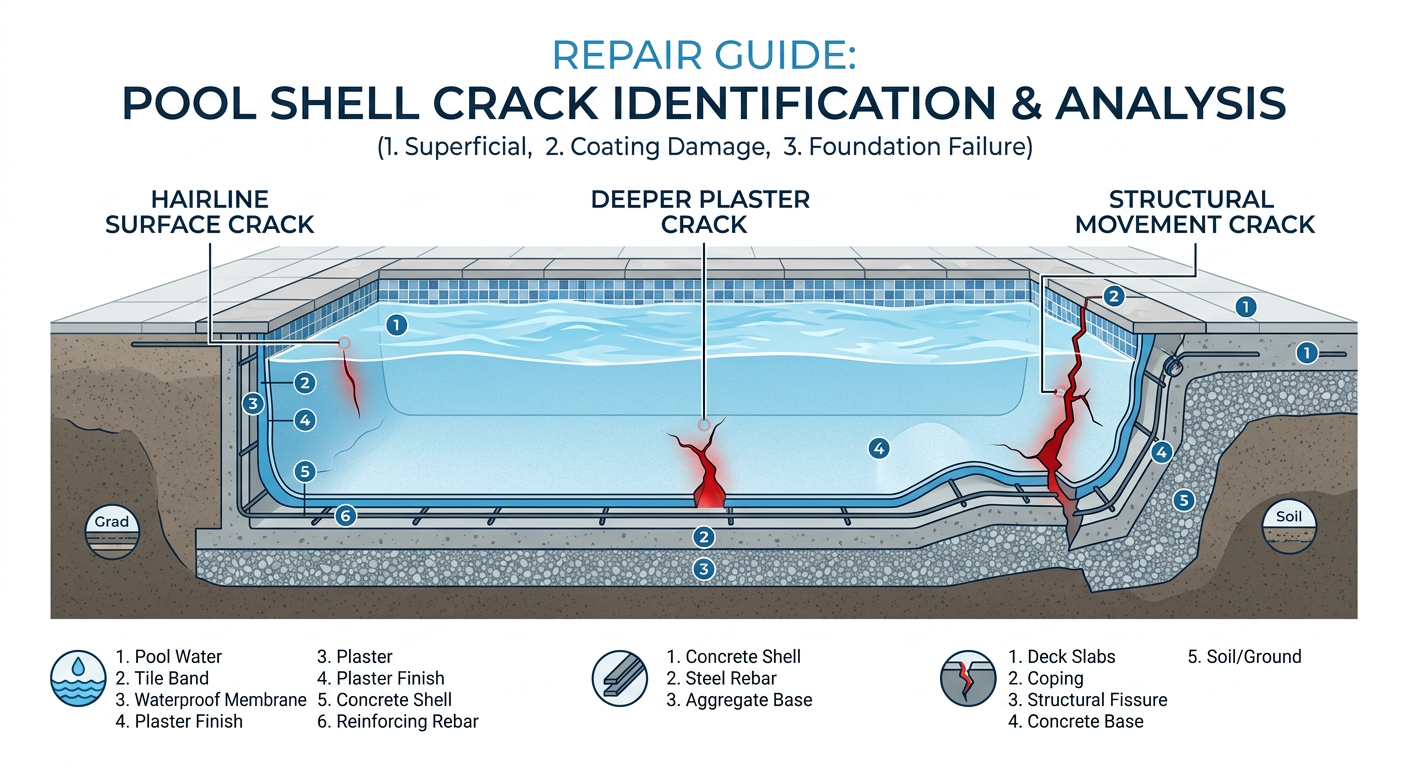
How to Tell If the Crack Is Cosmetic or Serious
Before you repair anything, inspect the crack closely. Hairline plaster cracks are often narrow, shallow, and stable. Structural cracks are usually wider, may change over time, and can appear in more than one area.
Signs the crack may be minor
- Thin line with no widening
- No water loss
- No surrounding delamination
- Surface-only appearance
Signs the crack may be more serious
- Crack grows over time
- Water level drops noticeably
- Nearby plaster sounds hollow
- Multiple cracks appear in the same zone
- Cracks line up with shell movement or settlement
When in doubt, document the area, monitor it, and compare it over several days. That simple step can help you decide whether you need a spot repair or a larger restoration plan.
Best Way to Repair Pool Plaster Cracks
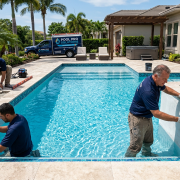
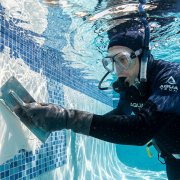
The best repair method depends on the crack size, location, and whether it is active. For surface-level cracks, a durable patching compound designed for pool plaster is usually the right choice. For underwater or hard-to-drain repairs, use a product made for submerged application.
Step-by-step repair approach
- Drain or lower the water level if needed.
- Clean the crack thoroughly and remove loose material.
- Open the crack slightly if the repair product requires a keyed edge.
- Rinse away dust and debris.
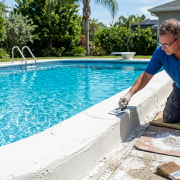
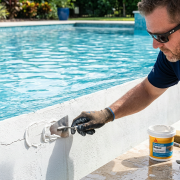
- Apply the repair material according to the manufacturer’s directions.
- Smooth and blend the patch to match the surrounding surface.
- Allow proper cure time before refilling or resuming use.
For professional-grade pool plaster repair materials, shop Pool Interior Products. If the damage is part of a broader restoration project, Shop All Pool Repair Products for more options.
Choosing the Right Repair Product
Not every patch material performs the same way. A repair that works on a dry crack may not hold underwater, and a color mismatch can make a finished repair stand out more than the damage itself.
Look for these features
- Strong bonding to existing plaster
- Water resistance or underwater application capability
- Easy mixing and application
- Long-term durability
- Good color-matching potential
- Compatibility with pool plaster surfaces
If your project includes adjacent deck or coping issues, it may make sense to coordinate repairs with Pool Deck & Patio Products or Tile Products so the finished pool area looks consistent.
Color Matching Matters More Than You Think
A well-repaired crack can still look obvious if the patch color is off. That’s why color matching is a big part of a professional result, especially on older plaster where fading, staining, and mineral deposits have changed the original tone.
Tips for better color matching
- Test the patch in a small, low-visibility area first
- Compare the repair color in both wet and dry conditions
- Factor in aging, oxidation, and waterline staining
- Avoid assuming the original plaster color is still accurate
Small differences can be acceptable if the repair is smooth, sealed, and long-lasting. In high-visibility areas, the right blend makes a major difference in customer satisfaction.
When to Call a Pool Professional
Some pool plaster cracks are straightforward DIY repairs, but others are not worth the risk. If the crack is active, structural, or part of a larger failure pattern, professional assessment is the safer choice.
Call a pro if
- The crack keeps returning
- You suspect shell movement
- The plaster is delaminating
- Multiple problem areas exist
- The pool is commercial, heavily used, or under a service contract
Pool service companies, repair contractors, and distributors can also use Professional Discount Verification to access exclusive pricing on repair supplies.
Preventing Future Cracks
A good repair should solve the current issue, but prevention protects your investment. Balanced water chemistry, proper maintenance, and routine inspection all help reduce the chance of future cracking.
Prevention best practices
- Keep water chemistry in range
- Fix leaks promptly
- Avoid letting pools sit empty too long
- Inspect for early signs of movement or hollow areas
- Address small issues before they spread
For more company background and product support, visit About E-Z Patch.
Frequently Asked Questions
Can hairline pool plaster cracks be repaired without draining the pool?
Yes, some can, but only with a repair material designed for underwater use. If the crack is dry-access only or needs preparation, lowering the water level may be necessary.
How long does a plaster crack repair last?
A properly prepared repair using the right product can last for years. Longevity depends on crack stability, application quality, and water chemistry maintenance.
Will a patch match the rest of the plaster?
It can get very close, but exact matching is harder on older or stained plaster. Blending, testing, and choosing the right repair compound help improve results.
Do all pool plaster cracks mean structural damage?
No. Many are surface-level and cosmetic. Structural damage is more likely when the crack is wide, growing, or linked to movement or water loss.
What is the biggest mistake people make when repairing cracks?
Skipping surface prep. Loose plaster, dust, and moisture can keep the repair from bonding properly.
How do I know if I need resurfacing instead of patching?
If cracking is widespread, the surface is rough, or repairs keep failing, resurfacing may be the better long-term solution.
Ready to Repair the Crack the Right Way?
Don’t let a small crack turn into a bigger restoration problem. Start with the right materials, the right prep, and a repair method that fits the condition of your pool. For durable solutions designed for professionals and homeowners alike, explore Shop All Pool Repair Products and find the right fix for your project.
If you’re a contractor, service company, or distributor, you can also verify your professional account for discounts before you order.
Conclusion
Repairing pool plaster cracks is about more than filling a line in the surface. It’s about understanding the cause, choosing the right product, and making sure the fix lasts. When you handle the repair correctly, you protect the pool’s appearance, performance, and long-term value.