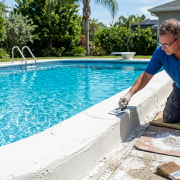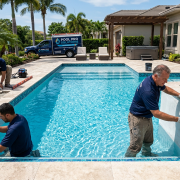
How To Patch Pool Plaster Under Water: A Practical Guide
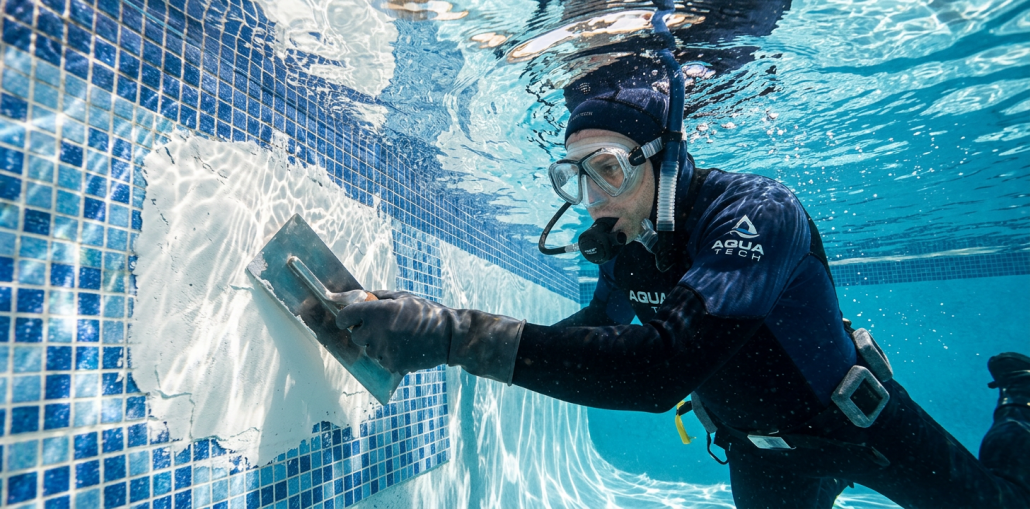
Pool surfaces take a beating. From constant water exposure to chemical balance swings, plaster eventually chips, cracks, or starts to pit. If draining the pool is not practical, learning how to patch pool plaster under water can save time, reduce downtime, and keep the pool usable while you handle the repair properly.
The good news is that underwater pool plaster repair is very manageable when you use the right material and follow the right process. The key is not rushing the prep work, because a repair that bonds well under water is usually the one that was cleaned, shaped, and packed in correctly from the start.
When Underwater Plaster Repair Makes Sense
Underwater patching is a smart option when the damaged area is small to moderate, the surrounding plaster is still sound, and lowering the water level would create unnecessary work or shut down the pool. This is common for service companies, property managers, and commercial operators who need a fast, durable fix without a full drain.
It is best suited for:
- Small chips and missing plaster spots
- Hairline cracks with minor surface loss
- Spalls around fixtures, steps, or waterline areas
- Localized wear in otherwise stable plaster
If the damage is widespread, soft, hollow, or actively delaminating, underwater patching may only be a temporary fix. In that case, a broader resurfacing plan is usually the better move.
Materials You Need Before You Start
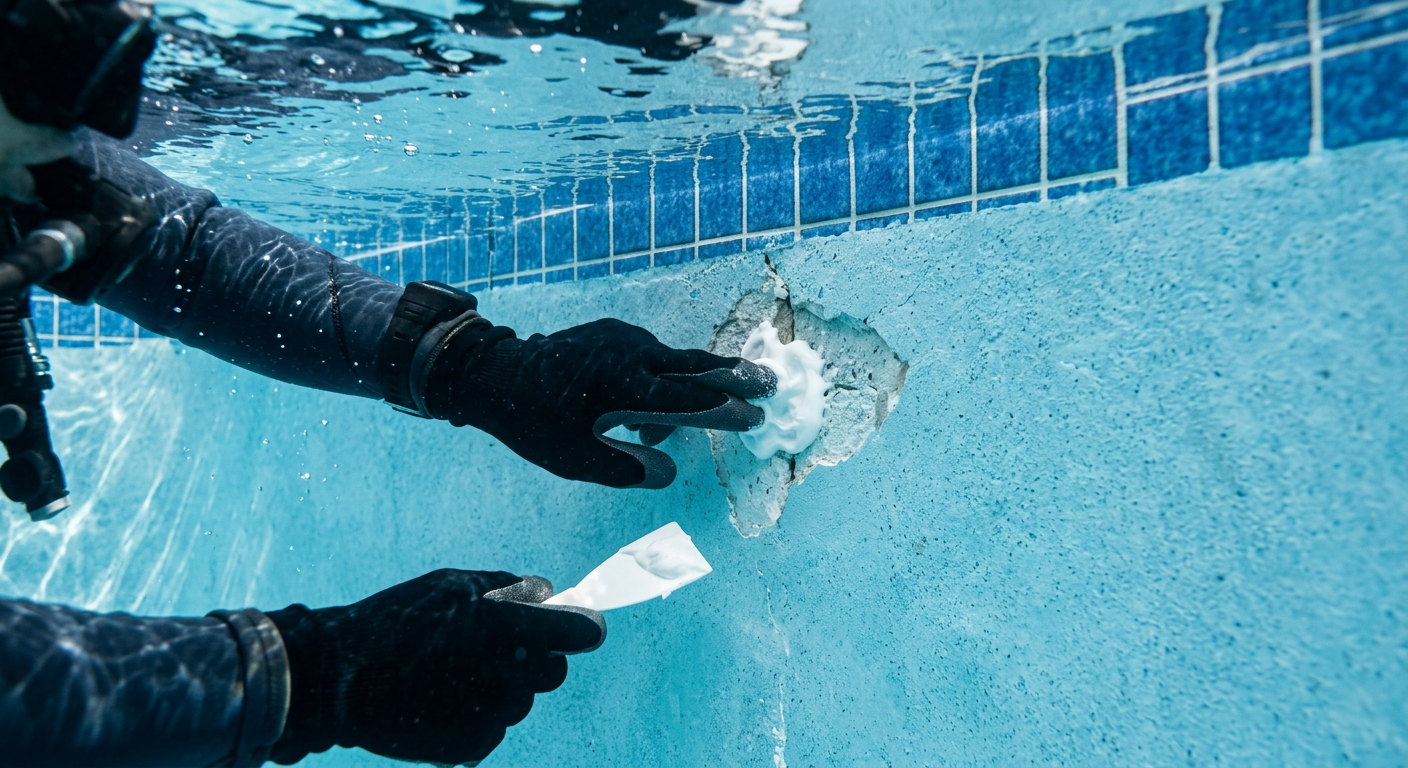
You do not want to improvise here. A successful repair depends on using a pool repair compound designed for underwater application, plus the right prep tools.
Have these on hand:
- Underwater pool plaster repair product
- Mixing container
- Margin trowel or putty knife
- Stiff brush or scrub pad
- Shop vacuum or hand siphon, if needed
- Safety gloves and eye protection
- Clean towel or sponge for surface prep above waterline
If you are working with a professional-grade product, follow the manufacturer’s instructions closely. For pool contractors and supply professionals, using a product built for underwater adhesion is the difference between a patch that holds and one that washes out.
Step by Step: How To Patch Pool Plaster Under Water
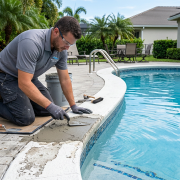
1. Inspect the Damage Carefully
Before anything else, check the size, depth, and edges of the damaged area. You want to confirm that the plaster around it is stable and that the defect is not part of a larger structural issue.
If the surrounding area sounds hollow or flakes easily, the repair may need more than a surface patch.
2. Clean the Area Thoroughly
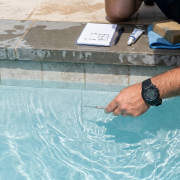
This is the part people skip, and it matters most. Brush away algae, loose dust, debris, and any weakened plaster fragments. A clean bond surface gives the patch material something solid to grab onto.
If the repair area is slimy or contaminated with oils, scrub it harder until it feels clean and gritty rather than slick.
3. Shape the Edges
If possible, undercut or slightly bevel the damaged edges so the new material locks into place instead of sitting on top like a cap. Even a small amount of edge shaping can improve durability.
A neat edge also makes finishing easier once the material is in place.
4. Mix the Repair Material Correctly
Follow the label instructions exactly. Too much water weakens the patch, while too little can make it unworkable. You want a consistency that can be packed into the defect and pressed firmly into position.
Mix only what you can use within the working time window. Underwater repair compounds can set faster than expected.
5. Apply the Patch Firmly
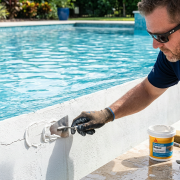
Press the material directly into the damaged area with strong, deliberate pressure. The goal is to force out trapped air and make the compound key into the surface.
Build the patch slightly proud of the surrounding plaster if needed, then smooth it as closely as possible to the surrounding finish.
6. Smooth and Feather the Edges
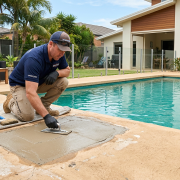
Use your trowel or finishing tool to blend the patch edges into the existing plaster. A good repair should look intentional, not like a lump sitting on the wall.
If the product allows light shaping after placement, take your time here. A smoother finish usually means a better final appearance.
7. Let It Cure Undisturbed
Even underwater repairs need cure time. Avoid brushing, vacuuming, or heavy water movement near the patch until the material has set according to the product instructions.
That patience pays off. Moving too soon can weaken the bond before it fully develops.
Common Mistakes That Lead to Failed Repairs
Here is the thing, most underwater patches fail for predictable reasons, not because the product was bad.
Watch out for these mistakes:
- Skipping surface cleaning
- Applying material to loose or hollow plaster
- Using the wrong mix consistency
- Trying to patch in strong current or turbulence
- Overworking the repair after placement
- Ignoring cure time
If the patch looks good but does not stay put, the issue is often preparation, not appearance.
Choosing the Right Repair Product
For long-lasting results, use a repair compound specifically made for underwater pool plaster work. A general-purpose cement mix usually is not enough. Professional repair products are formulated for adhesion, underwater placement, and color-matched blending where possible.
For contractors, pool builders, and distributors, this matters even more because customers expect repairs to hold up under real pool conditions, not just look acceptable for a day.
If you are building a repair system for your business, it also helps to keep related products on hand, such as tile repair, coping repair, crack repair, and deck repair materials. That makes it easier to offer a complete restoration solution instead of a one-off fix.
When You Should Drain the Pool Instead
Underwater patching is efficient, but it is not always the best answer. Draining the pool may be the better choice when:
- The damage is widespread
- The plaster is delaminating
- The surface needs major color blending
- Structural repairs are required
- Visibility is too poor to work accurately
If a section keeps failing after repeated patching, a deeper inspection is usually the smarter investment.
FAQ
Can you patch pool plaster while the pool is full?
Yes, small plaster repairs can often be done while the pool remains full, as long as you use a product designed for underwater use and prepare the surface correctly.
How long does an underwater plaster patch last?
A properly installed patch can last a long time, but durability depends on surface prep, product quality, chemical balance, and how severe the original damage was.
Will the patch match the existing plaster color?
Sometimes it will blend well, but exact color matching is difficult because older plaster fades, stains, and ages differently from new material.
Can I use regular cement underwater?
Regular cement is not the best choice for this type of repair. You want a repair material formulated for underwater adhesion and pool conditions.
Do I need to drain the pool for small chips?
Not necessarily. Small chips, pits, and localized surface loss are often good candidates for underwater patching.
How soon can the pool be used after the repair?
That depends on the repair product and cure time. Always follow the product directions before resuming normal swimming activity near the repair.
Keep Your Repair Simple, Clean, and Durable
Underwater plaster repair works best when you respect the basics, clean the defect, use the right material, and let the patch cure properly. If you do those things well, you can restore the surface without the cost and disruption of draining the pool.
For pool pros, that means faster service calls and happier customers. For homeowners, it means a cleaner-looking pool and fewer headaches down the road.
Get the Right Repair Materials for the Job
If you want dependable results, start with professional-grade repair products made for real pool conditions. E-Z Patch® offers pool plaster repair kits and other restoration materials designed for durable, cost-effective repairs that are easy to apply.
Visit E-Z Patch® to explore underwater repair solutions, plaster patch kits, and related products for tile, coping, decks, and cracks.